CB Radio vs Two-Way Radio: Which Do You Need? (October 2026)
For CB radio vs two-way radio, choose CB to reach other CB users or FRS handhelds to keep your own group in touch. CB is itself a two-way radio, so match the radio service before comparing features.
On this page (9 sections)
- CB radio vs two-way radio: what is the difference?
- Who should choose CB, and who should choose FRS?
- Which of these 3 radios fits your plans?
- How far can CB and FRS radios reach?
- How should you set up a CB radio in a vehicle?
- How do you set up FRS radios for a group?
- What use and care habits prevent missed calls?
- Which buying mistakes should you avoid?
- What should you choose for your next trip?
For CB radio vs two-way radio, choose CB to talk with CB-equipped drivers or FRS handhelds to keep your own group in touch. CB is itself a two-way radio, so the real choice is between radio services.
Start with the people you need to reach. A radio with more features is no help if it cannot communicate with their equipment.
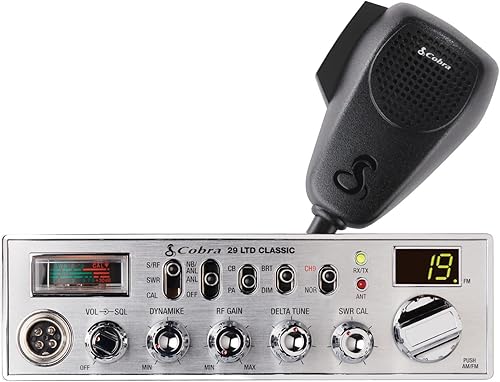
For regular vehicle use, the Cobra 29 LTD Classic fits a fixed installation. The Cobra HHRT50 offers portable CB use, while the Motorola Talkabout T210TP suits a family or small group carrying FRS handhelds.

CB radio vs two-way radio: what is the difference?
CB and FRS are separate radio services, while “two-way radio” describes any radio that can transmit and receive. A handheld shape does not tell you which service a radio uses.
CB stands for Citizens Band, and FRS stands for Family Radio Service. The CB models here access 40 CB channels; the Motorola pack uses 22 FRS channels.
Channel numbers only make sense within the same service. Channel 5 on an FRS radio is not the same radio frequency as channel 5 on a CB.
| Decision | CB radio | FRS handheld |
|---|---|---|
| Who you can contact | Other compatible CB users | Other compatible FRS users |
| Main reason to choose it | Join communication among CB-equipped drivers | Equip your own family or group |
| Setup to consider | Vehicle antenna, mounting and power, or portable CB equipment | Charging, carrying and matching settings |
| Can it speak directly to the other service? | No | No |
| Does it need cell coverage? | No | No |
CB users also need matching operating modes. With an AM/FM CB, both people must select the same channel and mode to communicate.
This comparison focuses on CB and FRS. Other radios sold as “two-way radios” may use different services and have different operating requirements, so check the service before adding another model to your group.
Who should choose CB, and who should choose FRS?
Choose CB for access to CB conversations and FRS for communication within an equipped group. Your contacts matter more than a claimed maximum distance.
A driver traveling alone may value the chance to speak with nearby CB users. A family separating briefly at a campsite usually needs several matching handhelds rather than access to road conversations.
CB radio vs two-way radio for drivers
CB suits drivers whose intended contacts already use CB. It gives you a way to join that service without handing a radio to every person you might speak with.
It does not guarantee a steady stream of useful traffic information. Activity varies by place and time, and another driver's report may be incomplete or no longer current.
Read whether truckers still use CB radios if road communication is your main reason for buying. Choose around the routes and people that matter to you.
Skip CB if your only contacts carry FRS radios and nobody plans to change equipment. You would need compatible radios on both ends, even if the CB has more controls.
FRS handhelds for families and small crews
FRS suits groups that can agree on equipment and settings before leaving. Each person or subgroup can carry a radio while walking around a campsite, outdoor event or nearby work area.
For a small crew, think about how often people speak and how noisy the surroundings are. A shared channel can become crowded if several people try to give instructions at once.
Skip this approach if the job depends on constant contact across a large or obstructed area. Consumer handhelds should not be the only communication plan where a missed call could leave someone stranded or exposed to danger.
Which of these 3 radios fits your plans?
Pick the Cobra 29 LTD Classic for a regular vehicle installation, the HHRT50 for portable CB use, or the Motorola pack for your own group. Each solves a different communication problem.
Cobra 29 LTD Classic for a dedicated vehicle setup
The Cobra 29 LTD Classic fits drivers who want a radio mounted in one vehicle. It offers AM/FM operation, 4-watt output, adjustable RF Gain and SWR calibration.
RF Gain lets you adjust receiver sensitivity when managing background noise and incoming signals. The SWR function helps check the antenna system, which matters when setting up a vehicle CB.
Measure the mounting area before buying: the radio is 9.25 inches deep, 7.25 inches wide and 2.25 inches high. Leave additional room for connections, ventilation and access to the controls.
Skip it if you want a pocket radio or regularly move between vehicles without suitable installations. It also is not water resistant, so choose a dry, protected mounting position.
For more detail on its controls and fit, read the Cobra 29 LTD Classic review.
Cobra HHRT50 for occasional vehicle use
The Cobra HHRT50 suits someone who wants CB communication in a handheld format. Its included magnetic-mount antenna gives you an external antenna option for use inside a vehicle.
NOAA weather reception and Dual Watch add useful listening options. Dual Watch monitors 2 selected channels, which helps when your group uses one channel and you want to follow another.
Plan for its 9 AA battery requirement before a trip. Portable equipment still needs a power plan, somewhere secure to sit and a safe route for the antenna cable.
Skip it if you want controls permanently mounted within easy reach every day. Its portable format also does not remove the need to check antenna placement each time you set it up.
Motorola Talkabout T210TP for group outings
The Motorola Talkabout T210TP gives a small group 3 FRS radios, with easy pairing, USB charging and NOAA weather alerts. It is the practical choice here when nobody needs CB access.
Motorola gives about 18 hours of battery life with the included 800mAh battery. Plan charging around your trip rather than assuming every pattern of use will reach that figure.
Its 121 privacy codes help filter which calls open the speaker. They do not encrypt speech, reserve a channel or stop someone with compatible equipment from hearing you.
Skip this pack if you need to speak with CB-equipped trucks. Also count how many separate groups need radios: 3 units may be enough for 3 people, but a larger party needs a clear sharing plan or more compatible units.
How far can CB and FRS radios reach?
Neither service has a dependable distance for every location. Terrain, antenna position, buildings and interference can change usable range along the same route.
A clear path across open ground is different from a path through hills or several buildings. Vehicles can also move out of contact quickly when one turns behind an obstruction.
Do not choose a radio by comparing maximum-mile figures alone. Those figures cannot tell you whether a call will get through from a particular campsite, road bend or parking area.
For CB, antenna placement and installation deserve as much attention as the radio itself. Our guide to how far a CB radio can reach explains the main limits.
Before relying on either service, make short calls from the places where your group expects to separate. Agree on a meeting point and time so a lost signal does not turn into an open-ended search.
If contact becomes weak, stop somewhere safe and try a clearer position. Moving outside a vehicle or away from a large obstruction may help a handheld, but never climb or enter an unsafe area to chase reception.
How should you set up a CB radio in a vehicle?
Plan the antenna, mounting position and power connection before using a vehicle CB. A radio that switches on still needs a suitable antenna system to communicate properly.
For a fixed installation, follow the radio and vehicle instructions for power wiring and protection. Keep the radio, microphone and cables clear of pedals, steering controls, airbags and the driver's view.
Choose a mounting position that lets you read the display without leaning across the cabin. Secure the microphone so it cannot fall into the footwell or swing during a sudden stop.
A vehicle antenna must suit the radio service and installation. Follow its instructions for placement and SWR checks, and avoid transmitting through a disconnected or damaged antenna system.
With the HHRT50, Cobra recommends placing the magnetic antenna at the center of a suitable vehicle roof for the clearest connection. Check that the surface supports a magnetic mount, and route the cable without crushing it in a door.
Use the guide to installing a CB radio in a truck or car for the full setup process. Make adjustments while parked, then confirm communication before starting the trip.
How do you set up FRS radios for a group?
Charge the radios and match the channel and privacy-code settings before anyone separates. Similar-looking displays do not guarantee that everyone's settings match.
Start with the radios together and exchange a short message in both directions. If an existing FRS radio cannot hear the others, check its code settings as well as its channel.
Code numbers may differ between brands, so compare the instructions when mixing models. Turning codes off can help identify a mismatch, though everyone will then hear more traffic on that channel.
Choose a backup channel in case the first one becomes busy. Make sure everyone knows when to switch, since changing channels without telling the group can make a working radio seem broken.
Assign radios by subgroup rather than by habit. If 2 people always stay together, they can share a unit while another goes with the person likely to leave camp.
Pack the correct charging cables and allow time to charge every unit. Keep power connections dry, and do not assume a campsite or vehicle will have enough available charging ports.
What use and care habits prevent missed calls?
Keep messages short, listen before speaking and check equipment before each outing. These habits help more than repeatedly changing channels when a call fails.
Press the talk button, pause briefly, then speak clearly in a normal voice. Release the button when finished so the other person can reply.
Most radios in this class handle one speaker at a time. Call the person's name first, give one clear message and wait for an acknowledgment before adding another instruction.
Use squelch carefully on a CB. Raising it too far can silence weaker calls along with background noise, while increasing volume only makes the sound louder.
Keep antenna connectors secure and inspect cables for cuts or pinched sections. After an antenna strikes a branch or shifts position, inspect the mount and follow the antenna-check procedure before continuing normal use.
Wipe equipment with a soft cloth and follow the manual for cleaning and storage. Do not assume that a radio intended for outdoor trips can tolerate rain or immersion.
For channel habits and basic controls, use the plain guide to using a CB radio. Practice while parked so operating the radio takes less attention on the road.
Which buying mistakes should you avoid?
Avoid mismatched services, unrealistic range expectations and a weak power plan. These mistakes can leave a group unable to communicate even when every radio works.
Buying one radio for a group is a common planning error. Unless your contacts already carry compatible equipment, you need enough radios for both ends of each conversation.
Another mistake is treating weather reception as two-way access to weather staff. NOAA weather channels provide information; receiving a forecast does not let you transmit a request for help on that broadcast.
Privacy codes can also create false confidence. Use them to reduce unwanted speaker chatter, and keep personal details off shared radio channels.
Do not buy around an emergency-channel button alone. The Cobra 29 LTD Classic has instant channel 9 access, but no button guarantees that someone is monitoring or able to respond.
Finally, include the whole setup in your decision. A vehicle CB needs antenna and mounting plans, while a handheld group needs carrying, charging and regrouping plans.
What should you choose for your next trip?
The CB radio vs two-way radio decision comes down to your contacts and where the radio will live. Choose a service first, then the format you can keep ready to use.
Choose the Cobra 29 LTD Classic if one vehicle is your regular CB base. Choose the Cobra HHRT50 if occasional trips and moving the radio matter more than a permanent installation.
Choose the Motorola Talkabout T210TP when you are equipping your own family or small group. Agree on settings, charging and a meeting point before leaving.
If CB fits your contacts, use the site's CB radio guides and comparisons to narrow down the setup. Buy the equipment your group can use together and keep ready throughout the trip.
Frequently asked questions
Is a CB radio the same as a two-way radio?
A CB radio is a type of two-way radio because it can transmit and receive; in shopping comparisons, two-way radio often means an FRS handheld, which uses a different service from CB. Choose by the service your contacts use, rather than by the shape of the radio.
Which is better for a road trip?
Choose CB if you want to speak with CB-equipped drivers, or FRS if you are equipping your own travel group; for a convoy, agree on a channel and a regrouping point before leaving. Neither service guarantees contact after vehicles separate around hills, buildings or other obstacles.
Do two-way radios need cell service?
These CB and FRS radios communicate directly without cell service or a cellular plan; you still need another compatible radio within usable range, with matching channel settings. Carry a separate way to seek help because a radio cannot guarantee that someone will hear or answer your call.
Can CB and FRS radios talk to each other?
CB and FRS radios cannot communicate directly because they use different frequencies and radio services; matching the displayed channel number does not bridge that gap. Check the service on every radio in your group, then match the channel and any tone or privacy-code settings before leaving.
How far will a two-way radio reach?
Usable range depends on terrain, obstacles, interference and the antenna setup, so there is no single distance to promise; open ground can allow better contact than wooded hills or dense buildings. Plan around the shortest useful range on your route, with a meeting point if communication drops.


