Cobra 29 LTD Classic CB Radio Review: Worth It? (October 2026)
The Cobra 29 LTD Classic suits drivers who want a fixed-mount CB with AM/FM modes and built-in antenna checks. Choose it for a planned cab installation; consider the compact Uniden PRO520XL when mounting space matters most.
On this page (9 sections)
- Who should buy the Cobra 29 LTD Classic?
- What do the Classic's controls help you do?
- Will it fit safely in your truck or car?
- How should you set up the Cobra 29 LTD Classic?
- Which alternative fits your vehicle better?
- What should you expect from CB range and sound?
- How do you keep the radio and antenna working well?
- Which buying and setup mistakes should you avoid?
- Should you choose the Cobra 29 LTD Classic or an alternative?
The Cobra 29 LTD Classic is a good fit for drivers who want AM/FM communication and built-in antenna checks in a fixed-mount CB radio. Buy it when you have a proper mounting spot and a clear reason to use CB on your routes or with your group.
Its main trade-off is space: the body measures 9.25 inches deep, 7.25 inches wide and 2.25 inches high, before allowing for connections. If your dash is crowded, compare the compact Uniden PRO520XL among our trucker CB picks before planning around the larger Cobra.
Who should buy the Cobra 29 LTD Classic?
The Classic suits drivers who want a permanent cab radio with direct controls and the choice of AM or FM. It makes the most sense when the people you want to reach already use CB.
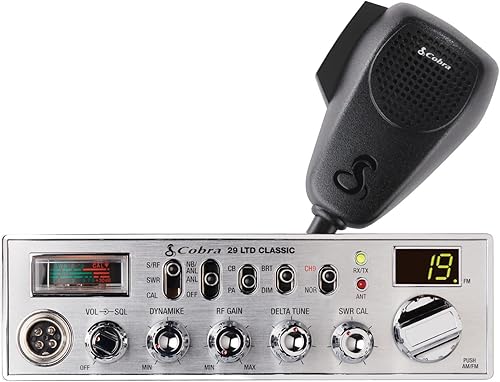
Cobra 29 LTD Classic
- AM/FM modes
- 40 channels
- RF Gain sensitivity control
- SWR calibration
Choose the Classic for a fixed cab installation when your group uses AM and FM and you want a built-in SWR meter for antenna checks.
Pros
- Communicates in AM or FM
- Adjustable receiver sensitivity
- SWR calibration and illuminated antenna-check indicator
- Instant channel 9 access
Cons
- Needs room for the chassis and rear connections
- Requires a separate compatible antenna setup
- Not water resistant
The radio provides 40 channels and 4 watts of output. Its useful buying distinction is the mix of communication modes, adjustable receiver sensitivity and an SWR meter for checking the antenna system.
The package includes the radio, DC power cord, microphone and separate brackets for the transceiver and microphone. Plan the full installation around those parts, a compatible antenna and any hardware your vehicle needs.
When is the Cobra 29 LTD Classic worth choosing?
Choose it for a work vehicle or road-trip group where matching other CB users matters. Having both modes gives you a choice, but everyone in the conversation still needs to select the same channel and mode.
It also suits someone willing to learn antenna checks instead of treating the radio as a plug-in accessory. The built-in meter is useful during setup and when a previously working antenna system develops trouble.
Skip it if you need a radio to carry between vehicles or use away from the cab. If you're deciding how a group should communicate, our CB radio vs two-way radio guide explains the broader choice.
For a small vehicle, mounting room may matter more than extra controls. The Uniden PRO520XL in our CB radio guide deserves a look when you can't place the Cobra securely within reach.
What do the Classic's controls help you do?
The controls help you match other users, manage incoming signals and check the antenna system. Learn those jobs separately so you don't try to solve every problem by turning the same knob.
| Control or feature | Practical use | Common mistake |
|---|---|---|
| AM/FM selection | Match the mode used by the other radio | Choosing the same channel but a different mode |
| RF Gain | Adjust receiver sensitivity for the signals around you | Turning it down until weaker callers disappear |
| SWR calibration and meter | Check how the antenna system is matched | Treating calibration as automatic antenna tuning |
| Instant channel 9 | Switch quickly to that channel | Assuming someone is always listening |
RF Gain changes reception, not how strongly you transmit. Turning it down can reduce distracting weak signals, but you may also lose a caller you wanted to hear.
Start with the manual's suggested setting and adjust in small steps while parked. If a nearby conversation is clear, avoid changing several controls at once.
SWR is a check on the antenna system's match to the radio. The calibration control prepares the meter to take a reading; correcting a poor reading may require work on the antenna, mount or coax connection.
The illuminated antenna-check indicator calls attention to a possible problem. Investigate it rather than repeatedly transmitting and hoping the warning clears.
Will it fit safely in your truck or car?
The Classic needs a secure mount with room for plugs, cable bends and your hand. A gap that matches the chassis dimensions alone may still be too tight.
Make a cardboard template before drilling, then place it in your proposed location. Check the fit from the normal driving position and with the seat adjusted through its usual range.
Rear connections need clearance so the coax and power lead aren't sharply bent or crushed. Leave enough access to inspect or disconnect them without pulling hard on the cables.
The 9-foot microphone cable helps with reach, but it also needs a sensible resting route. Check where it hangs when the microphone is clipped up and where it stretches when you pick it up.
Keep the radio and cable clear of pedals, the gear selector, steering movement and airbag areas. Mount the microphone where you can return it without looking down for a hook.
This is a dry-cab installation: the Classic isn't water resistant. Avoid spots beneath a leaking window or beside a drink holder, and allow ventilation around the radio.
Our guide to installing a CB radio in a truck or car covers the installation plan. For operating habits after setup, see how to use a CB radio.
How should you set up the Cobra 29 LTD Classic?
Start with the antenna, power connection and mounting, then adjust the receiver. A radio control can't make up for a loose antenna mount or damaged coax.
Plan the antenna before routing the cable
Choose a compatible CB antenna and a mount suited to your vehicle. Think about overhead clearance, a secure mounting surface and how the coax will enter the cab without being pinched.
Some antenna systems depend on the vehicle's metal body for their ground plane. Others need a different arrangement, so follow the antenna maker's instructions rather than copying another vehicle's installation.
Don't route coax across a sharp edge or through a closing door without proper protection. Leave a little slack at connection points so normal vehicle movement doesn't pull on the plugs.
Connect power as the manual directs
The Cobra uses 13.8-volt DC power. Follow its instructions for the power source, polarity, fuse protection and wiring rather than choosing a connection only because it's nearby.
Secure the wiring away from moving parts and heat. A tidy route should still let you reach the fuse and inspect the connections later.
Check SWR before regular use
Connect the antenna system before transmitting and follow the manual's calibration sequence. Use only the brief transmissions needed for the check, in a clear area and on a channel where you won't interrupt a conversation.
If the reading falls outside the manual's acceptable range, stop and inspect the installation. Check the antenna adjustment, mount and coax before returning to normal use.
Our Cobra 29 LTD Classic settings guide walks through the controls. Keep the manual nearby for the exact switch positions and calibration order.
Which alternative fits your vehicle better?
Choose the Uniden PRO520XL for a compact installation or the Cobra 29 LTD Chrome for its finish. Neither choice removes the need for a properly installed antenna.
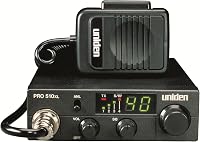
Uniden PRO520XL

- Compact design
- 40 channels
- Automatic noise limiter
- RF Gain control
A compact alternative for drivers who need to work around a crowded dash. Its front microphone connection, noise limiter and optional speaker connections help shape the installation.
Pros
- Compact body
- Automatic noise limiter
- Front-mounted microphone connection
- External speaker jack and PA function
Cons
- A CB antenna is required and sold separately
- External and PA speakers are optional extras
The PRO520XL suits a driver working around a crowded center console or limited dash space. Its front-mounted microphone connection can help keep that connection accessible when the sides of the radio are close to surrounding trim.
It has an automatic noise limiter and RF Gain control. These give you ways to manage reception, but installation quality still matters if electrical noise enters through the vehicle.
An optional external speaker can be placed where it's easier to hear, while the PA function uses a separate optional PA speaker. Decide whether you need either before routing extra wires.
Skip the Uniden if your main reason for shopping is the Classic's AM/FM choice and built-in SWR calibration. Those are the Cobra features to prioritize when comparing these radios.
Cobra 29 LTD Chrome

- AM/FM modes
- 40 channels
- RF Gain sensitivity control
- SWR calibration
Choose this version when you want the Classic's core controls in a chrome finish. It needs the same mounting space, so appearance is the main reason to choose it.
Pros
- Chrome finish
- AM/FM communication
- Adjustable receiver sensitivity
- Built-in SWR calibration and check indicator
Cons
- No mounting-space advantage over the Classic
- Requires a separate compatible antenna setup
- Not water resistant
The Chrome version suits a cab where you want the radio to match bright interior trim. Its core communication and antenna-check features match the Classic, so choose between them mainly by finish.
It also shares the Classic's body size and microphone-cable length. Skip it if you're trying to gain mounting clearance or expect the chrome finish to improve communication distance.
For help matching a radio to your vehicle and routine, read how to choose a CB radio for a truck. Our Cobra vs Uniden comparison gives more context for choosing between the brands.
What should you expect from CB range and sound?
Expect range to change with the antenna, terrain and surroundings. Don't choose between these radios by treating a maximum-distance figure as a promise for your route.
An open stretch of road presents a different radio path from a valley, dense buildings or a heavily wooded area. The other person's antenna and installation also affect whether you can hold a conversation.
Matching the channel and mode comes before judging sound quality. If a companion is close but you can't understand them, confirm both settings before assuming the radio is faulty.
For a group trip, agree on a channel, mode and backup contact method before leaving. A quick radio check while parked can reveal a wrong setting or disconnected microphone before the group spreads out.
Read how far a CB radio can reach for the main distance limits. Instant channel 9 access is a shortcut, so keep another way to seek help rather than assuming a reply.
How do you keep the radio and antenna working well?
Keep the equipment dry, secure and free of cable strain, and recheck the antenna after a strike or mounting change. Small physical problems can affect communication even when the radio still powers on.
Inspect the antenna mount after contact with branches or another overhead object. Look for a shifted antenna, loose hardware or a damaged cable before checking SWR again.
Check coax where it passes through the vehicle body and around trim. Flattened sections, worn insulation and loose connectors need attention rather than another receiver adjustment.
Clean the radio with a soft, dry cloth and avoid spraying liquids into its controls. Store the microphone on its bracket so it doesn't fall into a footwell or pull against its connection.
If noise appears suddenly, notice when it happens. Noise that changes with engine speed or another electrical accessory gives you a useful clue about where to inspect the installation.
Which buying and setup mistakes should you avoid?
The biggest mistakes are buying before measuring, neglecting the antenna and changing several settings at once. Preventing those problems is more useful than choosing a finish first.
- Measuring only the radio: Allow room for the bracket, plugs, cable bends and access to the controls.
- Treating the antenna as an afterthought: Choose its type, mount and cable route as part of the radio purchase.
- Using RF Gain as a range control: It changes what you receive, not what another driver hears.
- Confusing SWR calibration with a repair: A poor antenna match needs investigation and correction.
- Changing modes without telling the group: Agree on both channel and mode before moving.
- Working through unfamiliar controls while driving: Learn the setup while parked and keep routine adjustments simple.
If reception becomes worse after an adjustment, return to your previous setting before changing something else. This gives you a clear way to trace what helped and what caused the problem.
Should you choose the Cobra 29 LTD Classic or an alternative?
Choose the Cobra 29 LTD Classic if your group uses CB, you want AM/FM flexibility and you can give the radio a secure, dry mounting spot. Make the antenna and installation plan part of that decision.
Pick the Uniden PRO520XL when cab space is the deciding factor and its controls meet your needs. Choose the Cobra 29 LTD Chrome when you want the same core Cobra features with a bright finish.
Before ordering, settle the mounting location and antenna route. If those still aren't clear, use our CB radio buying guide to compare options around your vehicle rather than choosing by appearance alone.
Frequently asked questions
Does the Cobra 29 LTD Classic have AM and FM?
Yes, the Cobra 29 LTD Classic supports AM and FM across its 40 CB channels; both radios in a conversation need the same channel and mode, so agree on those settings before a trip. Choose the mode your group uses rather than changing modes in search of extra range.
Does the Cobra 29 LTD Classic include an antenna?
Plan for a separate compatible CB antenna; the package includes the transceiver, DC power cord, microphone, microphone bracket and transceiver bracket. Choose an antenna and mount suited to your vehicle, then follow both manuals for installation and SWR checks before making regular transmissions.
What does RF Gain do on the Cobra 29 LTD Classic?
RF Gain adjusts how sensitive the receiver is to incoming signals; reducing it can make strong nearby conversations easier to follow when weaker signals create clutter, but it can also hide distant callers. It does not raise transmit power, repair an antenna problem or make other drivers hear you better.
Is the Cobra 29 LTD Classic waterproof?
No, the Cobra 29 LTD Classic is not water resistant; mount it inside a dry, protected area, away from drink holders, leaking windows and wet gear. Keep its microphone and connections dry too, and avoid spraying cleaner directly onto the face or into the controls.