Do Truckers Still Use CB Radios?
Yes, some truckers still use CB radios for nearby road reports and driver communication. A CB is most useful where other drivers use one and you can install a suitable antenna.
On this page (8 sections)
- Do truckers still use CB radios today?
- What do truckers use CB radios for?
- Which CB radios suit truck use?
- What should you check before installing a truck CB?
- How should you set up and use a CB on the road?
- Which mistakes and care habits matter most?
- Is CB still useful if you have a phone or truck GPS?
- Should you add a CB radio to your truck?
Yes, some truckers still use CB radios to exchange nearby road reports and talk with other drivers. A CB earns its place when people on your routes use it and your truck has a suitable antenna installation.
It lets you address nearby drivers without knowing their phone numbers. Phones, truck GPS devices, and official alerts still handle tasks that a local radio conversation cannot.
Do truckers still use CB radios today?
CB remains useful for some truckers, but activity varies by location, route, and time. A busy conversation on one stretch of highway doesn't mean you'll hear the same traffic throughout a trip.
Before buying, ask drivers who run your usual lanes which channels they use and when they hear useful traffic. A quiet channel may reflect few nearby users, an unsuitable setting, or an antenna problem.
Our CB radios guide covers the wider category. For cab layouts and equipment types, start with choosing a CB radio for a truck.
What do truckers use CB radios for?
Nearby observations are CB's strongest use: a driver ahead may explain a stopped lane, warn about debris, or describe an approach you haven't reached. Drivers traveling together can also coordinate brief stops without arranging a phone call.
Ask specific questions, such as which direction a delay affects or where a hazard sits. “Traffic is bad” offers little help without a location and direction.
A CB report doesn't mean an alternate road suits your truck. Use truck GPS navigators and current route information to check restrictions before taking a suggested detour.
Why do truckers still use CB radio for traffic updates?
CB lets truckers ask nearby drivers follow-up questions, which can make a road report more useful. You can clarify whether the problem affects your lane or has already cleared.
Information still has a short useful life, and a driver may report only what they can see. Read how far a CB radio can reach to understand why you may hear one side of a conversation without hearing the other.
Which CB radios suit truck use?
Choose by cab space, communication modes, and the controls you'll actually use. All 3 options below offer 40 channels, so the meaningful differences lie elsewhere.
For a wider equipment comparison, see our best CB radios guide. Leave room in your plan for the antenna, mount, cable, and installation work as well as the radio.
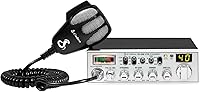
Cobra 29 LTD Classic: for drivers who want AM/FM and antenna checks
Choose the Cobra for AM/FM conversations and built-in SWR calibration. Its adjustable receiver sensitivity helps you manage incoming signals, while the antenna warning indicator prompts you to check the installation.
The 9-foot microphone cable gives you reach, but it still needs a safe resting place. Its cabinet measures 9.25 inches deep, 7.25 inches wide, and 2.25 inches high, so measure your mounting area and allow clearance behind the connectors.
Skip this model if you can't give it a secure, accessible mounting spot. Also, confirm which mode your contacts use: selecting FM won't let you follow a conversation taking place in AM.
Uniden PRO520XL: for drivers with limited mounting space
Choose the PRO520XL when a compact radio and straightforward controls matter most. It has RF gain, squelch, and an automatic noise limiter, giving you separate ways to manage reception and unwanted noise.
The front microphone connection helps keep that connection accessible in a tight installation. External speaker and PA connections support optional speakers, but only plan those additions if you need them.
An antenna is required and sold separately, so include it in your setup plan. Skip this choice if SSB communication is a firm requirement; the Bearcat below is the relevant option here.
Uniden Bearcat 980 SSB: for drivers whose contacts use sideband
Choose the Bearcat 980 if you plan to use SSB or want NOAA weather reception. Its noise-canceling microphone and illuminated controls also make it worth considering for a cab where background sound and visibility need attention.
The display offers 7 color choices, and the radio includes an integrated SWR function. Set the display while parked so it remains readable without drawing your attention away from the road.
Skip it if you only want brief local conversations and have no use for its extra functions. SSB requires matching the other station's channel and sideband, so it adds controls to learn rather than guaranteeing more useful traffic.
For more options organized around truck use, browse the best CB radios for truckers.
What should you check before installing a truck CB?
Check the antenna location and mounting space before choosing the radio. A convenient radio position won't rescue an antenna mounted where the truck body blocks it or where it cannot be secured correctly.
Confirm that your antenna mount suits the truck's construction. Some systems need a conductive ground plane, so don't assume a mount that works on a metal panel will work the same way on fiberglass.
Follow the antenna maker's placement instructions and check clearance around doors, mirrors, and overhead obstacles. Route coax away from pinch points and sharp edges, with enough slack for normal movement.
Inside the cab, keep the radio clear of controls and leave room for connectors and ventilation. Secure the microphone cord so it can't reach pedals or snag the steering area.
Use the correct power connection, polarity, and fuse arrangement described in the radio manual. Our CB radio installation guide explains the main setup choices.
Does more transmitter power solve a weak signal?
Start with the antenna match and installation, rather than assuming you need a different radio. Terrain, obstructions, interference, and the receiving station all affect whether a conversation works.
Check standing wave ratio, or SWR, as the instructions direct before routine transmitting. If the reading is high, inspect the antenna, connections, and coax before continuing.
The Cobra and PRO520XL both have 4-watt output, so power doesn't distinguish those 2 choices. Our CB radio range guide explains the other limits on useful reach.
How should you set up and use a CB on the road?
Make adjustments while parked, then keep road conversations short. A sensible starting point is a comfortable volume, a clear channel, and squelch set just high enough to stop idle hiss.
Too much squelch can hide weaker calls. RF gain changes receiver sensitivity, so avoid turning every control down simply to make the cab quiet.
Ask for a brief radio check and give a useful location if someone responds. Hold the microphone at the distance recommended in its manual and speak normally rather than shouting.
Start with channel 19 for highway conversation in the United States, while recognizing that local groups may use another channel. Listen first, avoid interrupting, and let go of the transmit button when your message ends.
Instant channel 9 access is a shortcut, not a promise that someone will answer. Use an appropriate emergency contact method when help is needed.
Our CB radio use guide covers basic etiquette. Cobra users can also follow the 29 LTD Classic settings guide to learn the controls before driving.
Which mistakes and care habits matter most?
Protect the antenna system and revisit settings before blaming poor reception on the radio. A changed control or loose connection can make a working setup seem silent.
Avoid these common mistakes:
- Copying range claims into trip plans. Contact depends on both stations and the conditions between them.
- Transmitting without a suitable antenna connected. Complete the antenna installation and match checks first.
- Assuming a quiet channel means a broken radio. Check channel, mode, squelch, and nearby activity.
- Taking radio detours without checking restrictions. A road that suits another vehicle may not suit your truck.
Inspect accessible cable sections and mounting hardware regularly. After a branch strike, antenna move, or sudden reception change, check the installation and SWR again.
Keep connectors dry and clean the controls with a dry cloth unless the manual says otherwise. The Cobra is not water resistant, so place it where leaks and spills won't reach it.
Is CB still useful if you have a phone or truck GPS?
CB adds local conversation, while a phone handles distant contacts and a truck GPS supports routing. CB communication doesn't need a cellular network, but it does need another compatible radio within usable reach.
For regular contact with a dispatcher or family member far away, use a tool built for that task. Choose CB because you want to hear and speak to nearby road users.
Read CB radio vs. two-way radio if you need to coordinate a group. Our truck GPS vs. car GPS comparison explains the separate routing decision.
Should you add a CB radio to your truck?
Truckers still use CB radios where nearby conversations help their work. Add one if you encounter other users and can support a proper antenna installation; skip it if you mainly need dependable contact with people far away.
Pick the Cobra for AM/FM operation and antenna checks, the PRO520XL for a compact installation, or the Bearcat for planned sideband use and weather reception. Let those needs decide which controls deserve space in your cab.
Before ordering, confirm your mounting location and antenna plan with the truck CB radio guide.
Frequently asked questions
Do truckers still use CB radios today?
Yes, some truckers still use CB radios for nearby driver communication, though activity varies by route and time. Their value comes from reaching drivers around you without exchanging phone numbers, so consider whether people on your regular routes use CB before committing to a permanent installation.
What do truckers use CB radios for?
Truckers use CB radios to share nearby road observations, ask about delays, and coordinate with other drivers. A report can help explain a stopped lane or a slow approach, but it may be incomplete or stale, so confirm any detour against truck restrictions and current route guidance.
What CB channel do truckers use?
Channel 19 is a common starting point for highway conversations in the United States, though local groups may use another channel. Listen before speaking, keep messages brief, and move longer conversations to a suitable clear channel; don't assume that channel 9 will bring a reply or emergency help.
Is a CB radio still worth installing in a truck?
A CB radio is worth considering if nearby drivers use it and you can fit a suitable antenna. Skip a permanent installation if you mainly need scheduled contact with distant people, cannot mount an antenna properly, or would rarely use the radio on your usual routes.